Butterfly Park

A Centre for Research, Training and Education
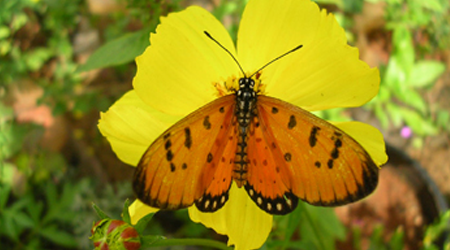
BBP is in the Northern most tip of the Mysore Elephant Reserve, between the Eastern and the Western Ghats. In order to avoid the unfavorable conditions during breeding season, butterflies migrate twice a year from the Eastern Ghats to the Western Ghats and vice versa. Hence the Blue tiger, the Striped tiger, the Plain tiger, the Common crow and Emigrants are commonly spotted during this season around the Bannerughatta Biological Park. Since this habitat is favorable for butterflies, it was identified as a priority in 2001 and hence gave rise to India's first Butterfly Park here in BBP in association with the Government of India and Government of Karnataka. It was conceptualized as an integrated centre that supports conservation, education and research activities with exclusive focus on butterflies as a flagship family of invertebrate conservation.
The butterfly park has the following major components:
1. A butterfly garden - to sustain local butterfly population.
2. A butterfly conservatory - enclosed under a polycarbonate roof.
3. A museum and an audio-visual dome.
4. Research and captive breeding laboratory.
5. Nursery host plants and nectar plants.
6. Host plant garden - for rearing caterpillars in lab.


Inaugurated in 2007, the Butterfly Park is a 7.5-acre sanctuary designed to blend seamlessly
with its natural surroundings. By preserving the original shrubs and trees of the adjacent
parkland, the facility provides an authentic ecosystem for local wildlife.
A 1 km dedicated butterfly trail that winds through curated gardens filled with host and nectar
plants. This path is designed to attract local butterfly populations before leading visitors to the
park’s central three-domed complex, which houses:



The conservatory leads to a museum that provides educative information on life evolutionary aspects, unique characters of butterfly and life cycle of locally available butterflies. Also movie about butterflies and moths is played throughout the day at Audio-visual centre in both English and the local language, Kannada.
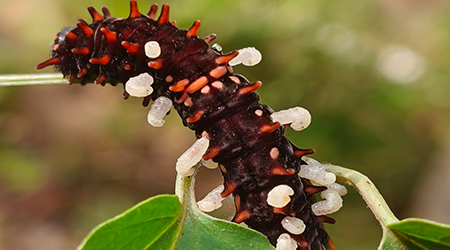
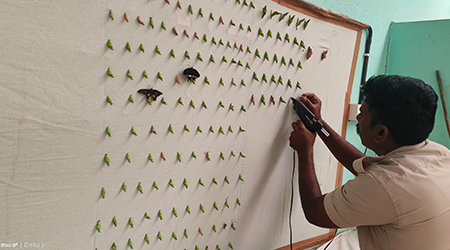
Apart from display and awareness creation to the public about these winged jewels, an off-show research and breeding lab is established to maintain a sustainable population of butterflies, moths and other insects. Dedicated rearing rooms are present for different life stages of butterflies.
Different species of butterflies along with the necessary host plant and nectar plants are housed in this area to support breeding. The second instar larva are collected and shifted to the larval chamber where sufficient host plant leaves are provided for feeding to ensure maximum numbers survive. The pupa are shifted to a pupal chamber and necessary support is provided to ensure metamorphism and hatching success. Once the butterflies hatch from the pupa, a sustainable population is retained in the lab for breeding and the remaining are released in the conservatory for public display.
Some of the success breeding includes that of the Southern Birdwing, Blue Mormon and Bush Brown to name a few. Through public participation, we aim to create awareness about how our survival is dependant on conservation of these ecosystem engineers.
1. A Butterfly Conservatory: An immersive tropical garden.
2. A Museum: Dedicated to lepidopterology.
3. A Multi-media Center: For interactive learning and conservation awareness.
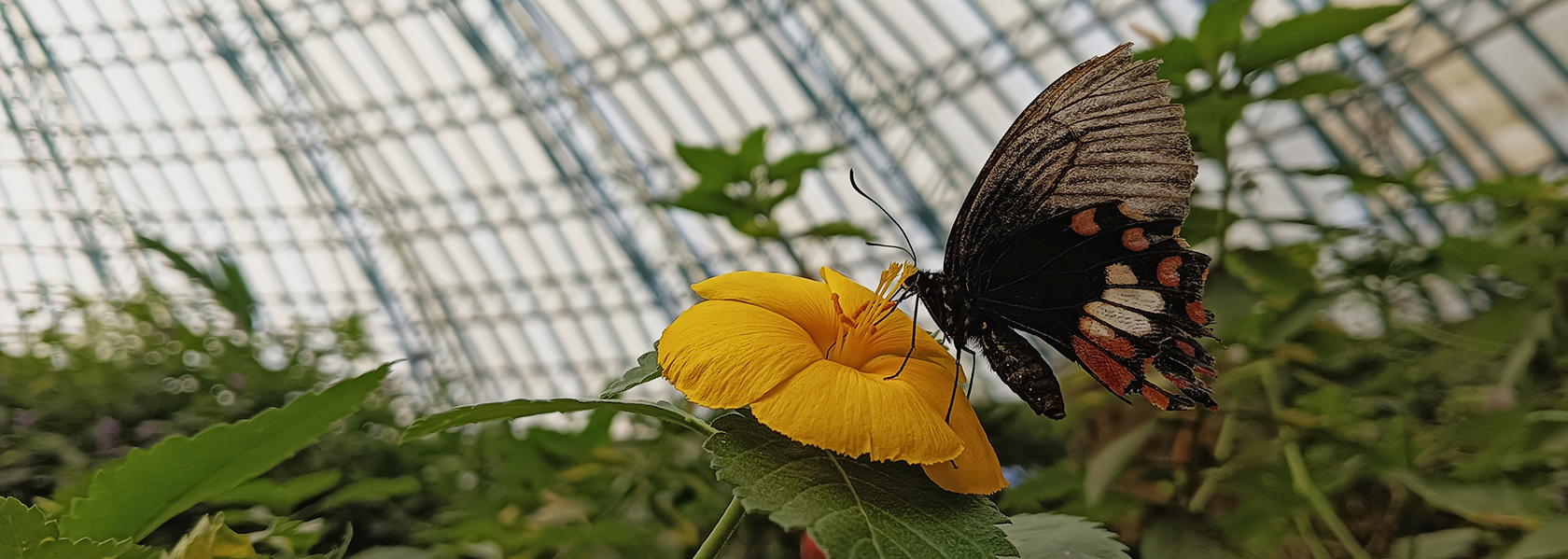
The Butterfly Conservatory is a closed landscaped garden under polycarbonate roof, spread over 10,500sqft. It provides a suitable habitat for butterflies throughout the year with both host and nectar plants along with diluted honey dipped in cotton is placed on artificial flowers and ripened fruits provides additionally by the enclosure's caregivers. Around 10 to 15 species of butterflies and moths, which are bred and reared in-house, are released in this area for visitor viewing. The conservatory is surrounded by metal mesh supported with concrete pillars and roofed with transparent polycarbonate sheets. Inside the dome, earthen pots with small holes are placed along the roof to minimize echo which lessens the disturbance to the butterflies. Appropriate temperature and humidity are maintained to support the flora and fauna, through sprinklers, water fall and air blowers. Guided tours by dedicated staff help visitors learn about butterflies, moths, their life cycle, and host plants.


INSECTARIUM
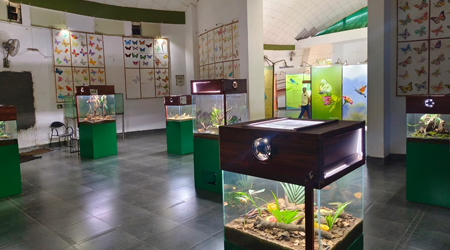
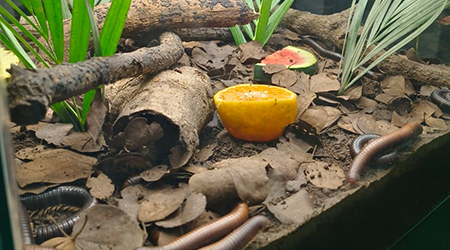
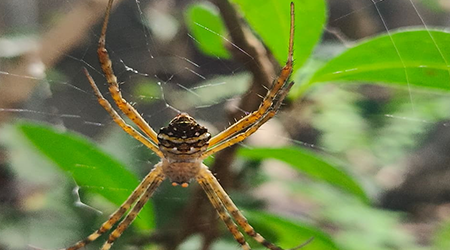
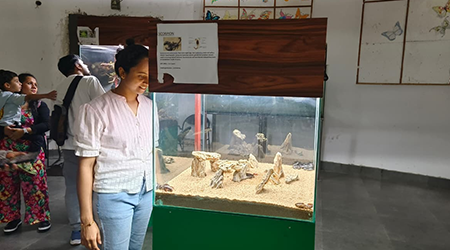
A new initiative of displaying insects was taken up as various species of insects are found around Butterfly Park. Accordingly, 8 to 10 locally available species of insects are exhibited currently in the insectarium to create awareness and educate students and general public. The conservatory connects to a museum that shares educational awareness into butterfly evolution, their unique traits, and the life cycle of local species. An audio-visual center plays films on butterflies and moths throughout the day in both English and Kannada making the experience available to all visitors. Beyond public displays, a dedicated research and breeding laboratory works to sustain populations of butterflies, moths, and other insects. Professional rearing rooms support each stage of the butterfly’s life cycle—from larvae fed on host plant leaves, to pupae carefully nurtured until successful hatching. Once matured, some butterflies are retained for breeding, while others are released into the conservatory for visitors to appreciate. Successful breeding programs have included species such as the Southern Birdwing, Blue Mormon, and Bush Brown. Through these efforts, combined with public participation, the park raises awareness of the vital role these 'ecosystem engineers' play in our survival and highlights the importance of conservation.